FIELD NOTES / PHL / South-Eastern Asia
Philippines
Vigan streets & cultural exchange.
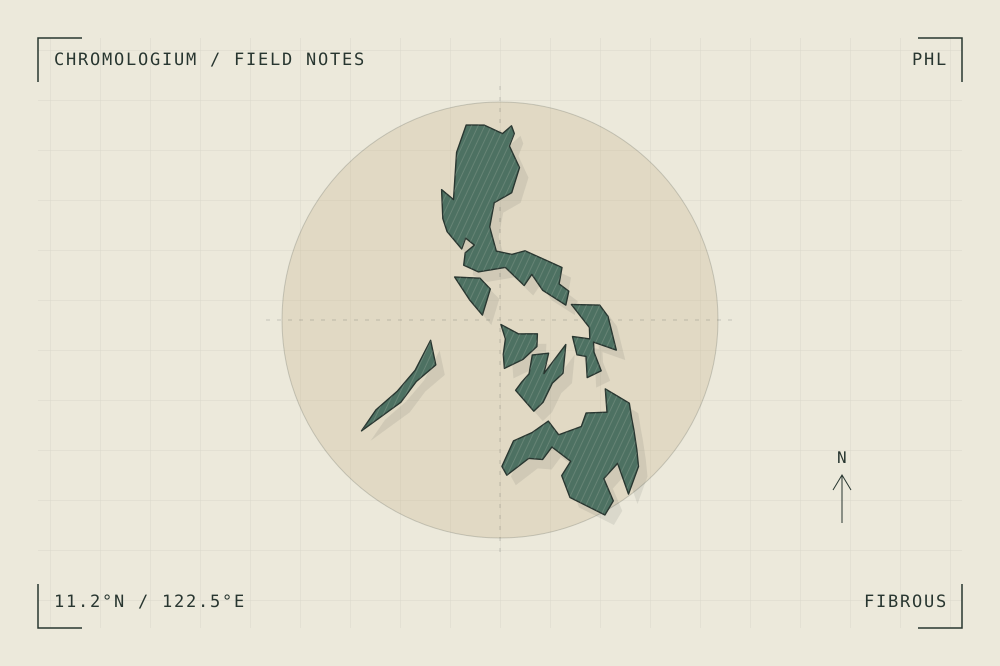
START WITH A PLACE
Historic City of Vigan
Vigan’s planned streets and buildings reflect connections between local Philippine practices, Chinese influences and European colonial planning. The townscape is the product of those encounters rather than a single imported style.
Read the source UNESCO World Heritage CentreA CLOSER LOOK
A study in grain and rhythm.
Compare the regular street plan with the details of individual houses. Look for where local building practices modify an inherited urban framework.
An editorial observation prompt, grounded in the reference above.
WORKING COLOUR
A palette to begin with.
Five editorial tones for this surface family. Use them as a starting point for a study; they are not measured samples from the site.
Fibre paper#ece9dboklch(0.933 0.019 96.873)
Cut straw#c5b08aoklch(0.766 0.057 82.249)
Forest shade#4d7162oklch(0.517 0.048 166.710)
Thread ochre#bd8453oklch(0.660 0.096 60.682)
Grain ink#283630oklch(0.318 0.021 166.943)