Wine & Verdigris
Surface & time
How can a surface suggest time while remaining legible?
Begin with a material, a reference, or a question. Explore what gives it character, test how that character translates, and make something that remembers its starting point.
See what visitors have accessioned to the Swatch RingThe daytime bench records the object before the light starts to move.
Midnight EditorialThree ways into the instruments. Follow a study, make one considered change, and keep the reason with the result.
Wine & Verdigris
How can a surface suggest time while remaining legible?

Oxford Library
What gives words room to hold your attention?
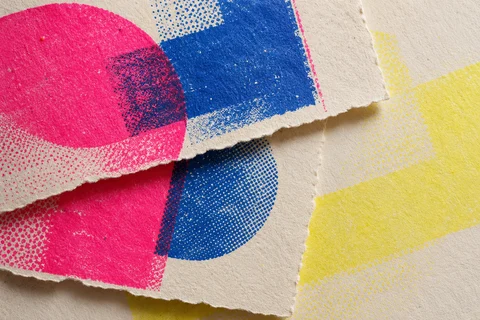
Risograph Ephemera
When does variation give a composition character?
19 of 19 instruments

Give the eye somewhere to arrive.
Choreograph three architectural layers. Scrub the sequence, leave room to read, and take away a working scroll scene.
Where does the composition need to pause?
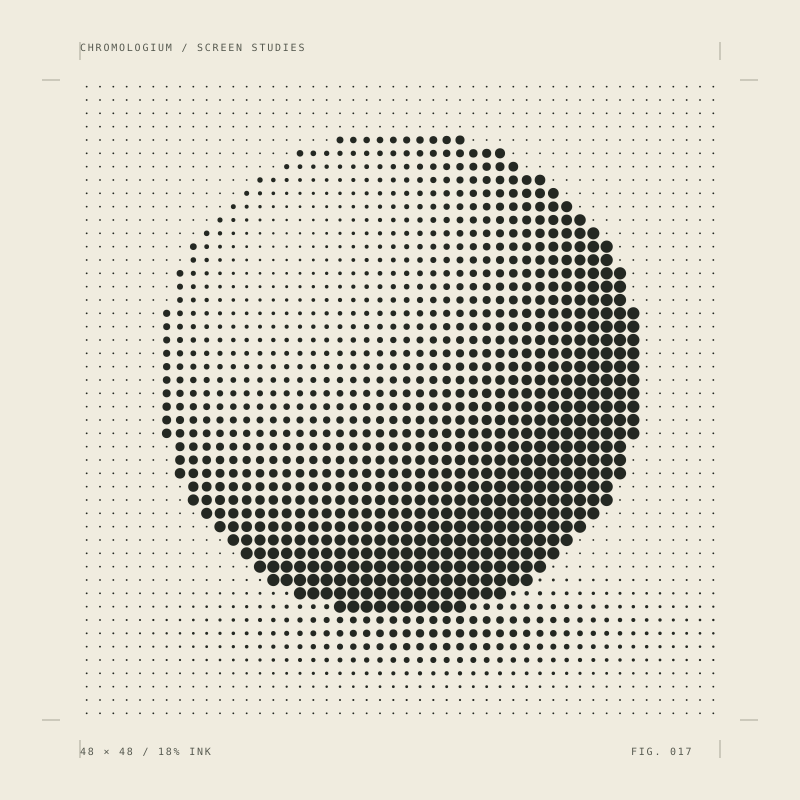
One ink. A thousand shades.
Turn an authored study or local image into a field of ink marks. Inspect the screen, compare tones, and take away a vector print.
How much detail can one ink describe?
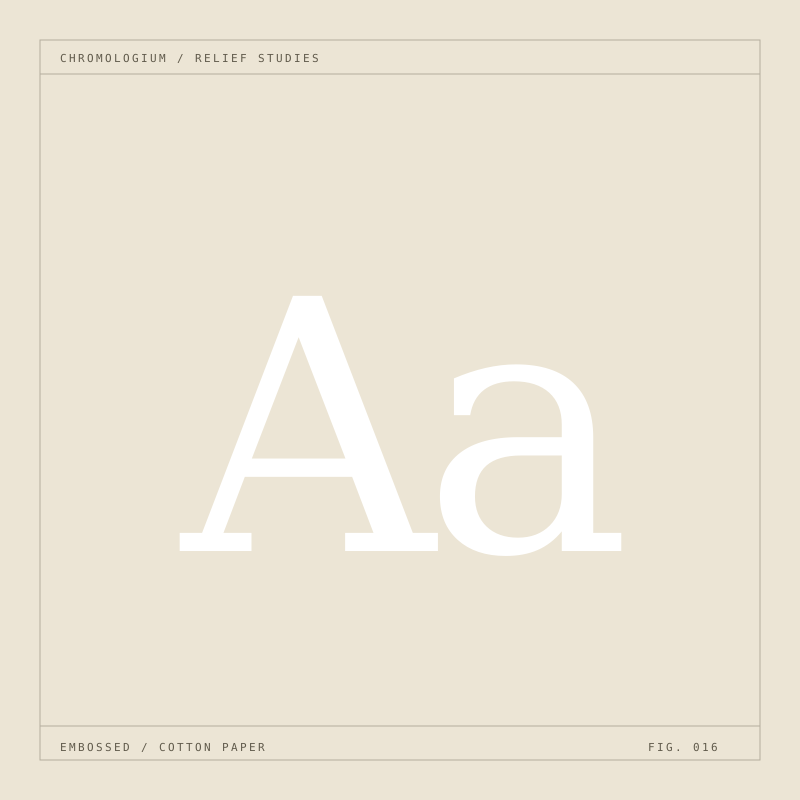
No ink. Just a change in depth.
Move a light across embossed lettering and engraved seals. Explore how depth, softness and surface change what you can read.
How little depth can still give a mark character?
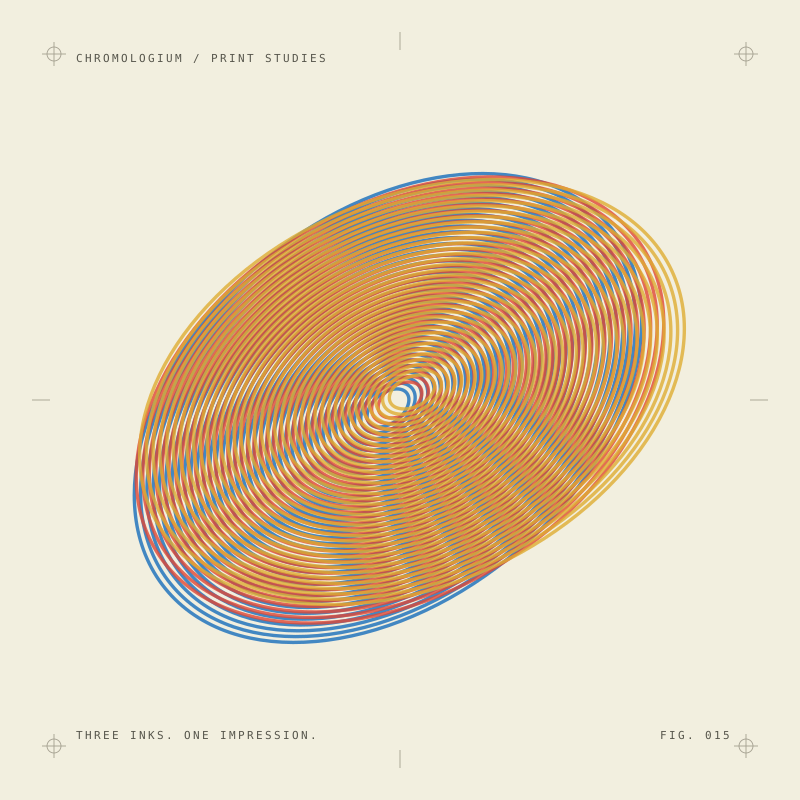
Three inks. One impression.
Separate ink plates and explore the colours and interference patterns that appear between them.
When does misalignment add character, and when does it obscure the image?
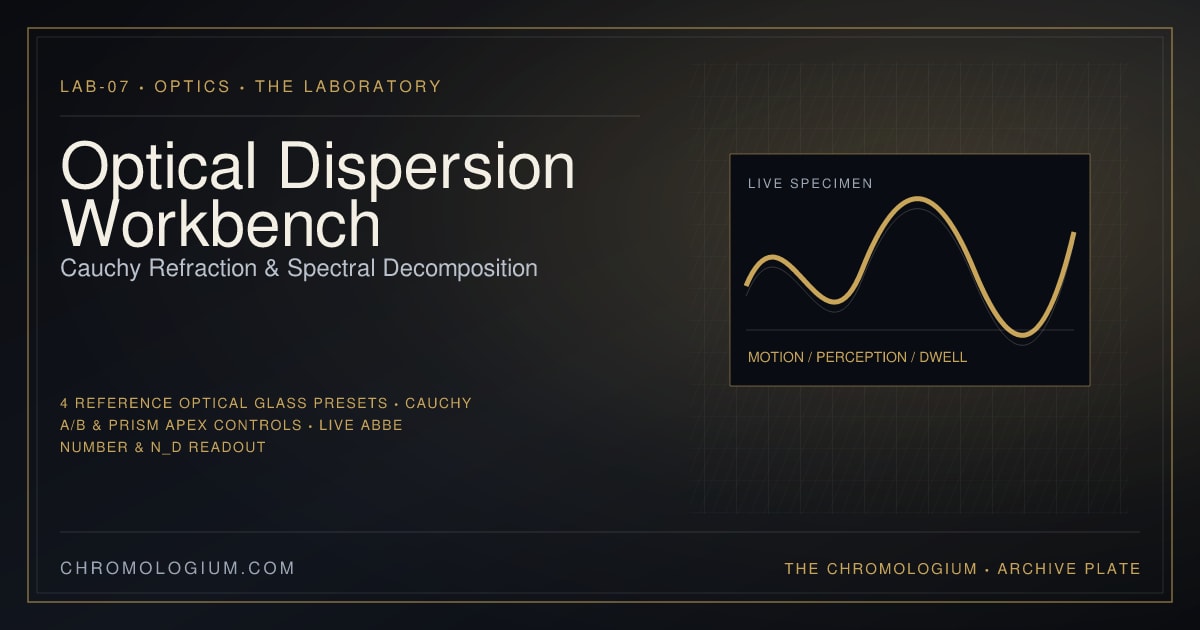
Cauchy Refraction & Spectral Decomposition
Steer a white beam through a live GPU prism governed by the genuine Cauchy relation n(λ) = A + B/λ². Tune real optical glasses, read Abbe numbers, and locate the active movement's accent token on the visible spectrum.
What changes when the glass changes?
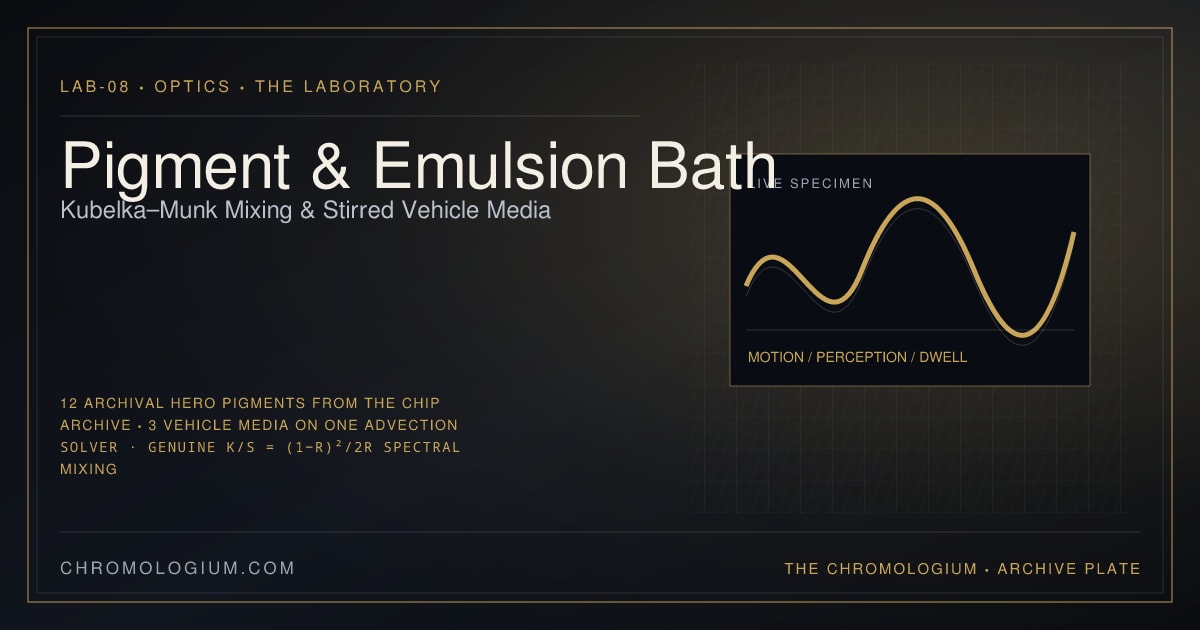
Kubelka–Munk Mixing & Stirred Vehicle Media
Stir archival hero pigments through linseed oil, watercolor wash, or encaustic wax. Two-constant Kubelka–Munk scattering mixes them like paint — gold into Klein blue turns palette-green, never RGB-gray.
What changes when colour is treated as material?
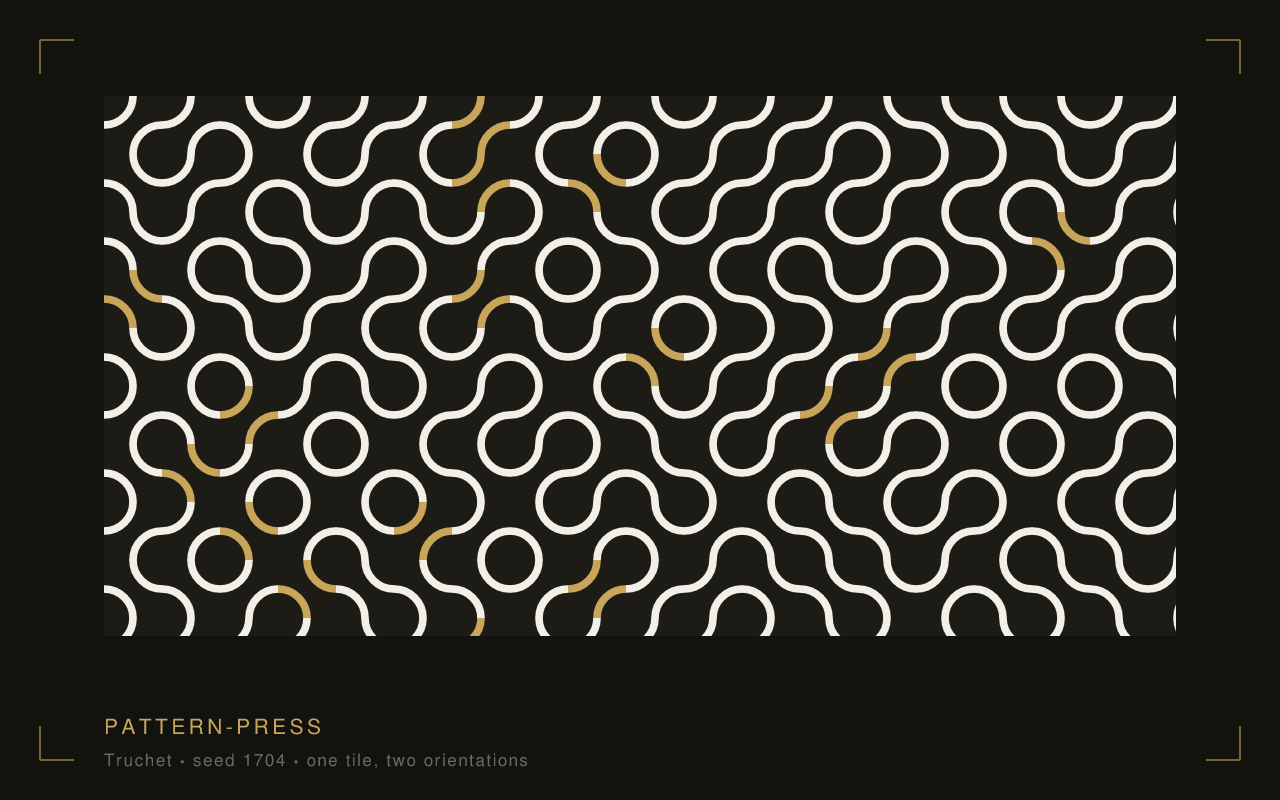
Generative marks, printed with intention
Four seeded pattern families for posters, interfaces and repeating surfaces.
How much repetition does this composition need?
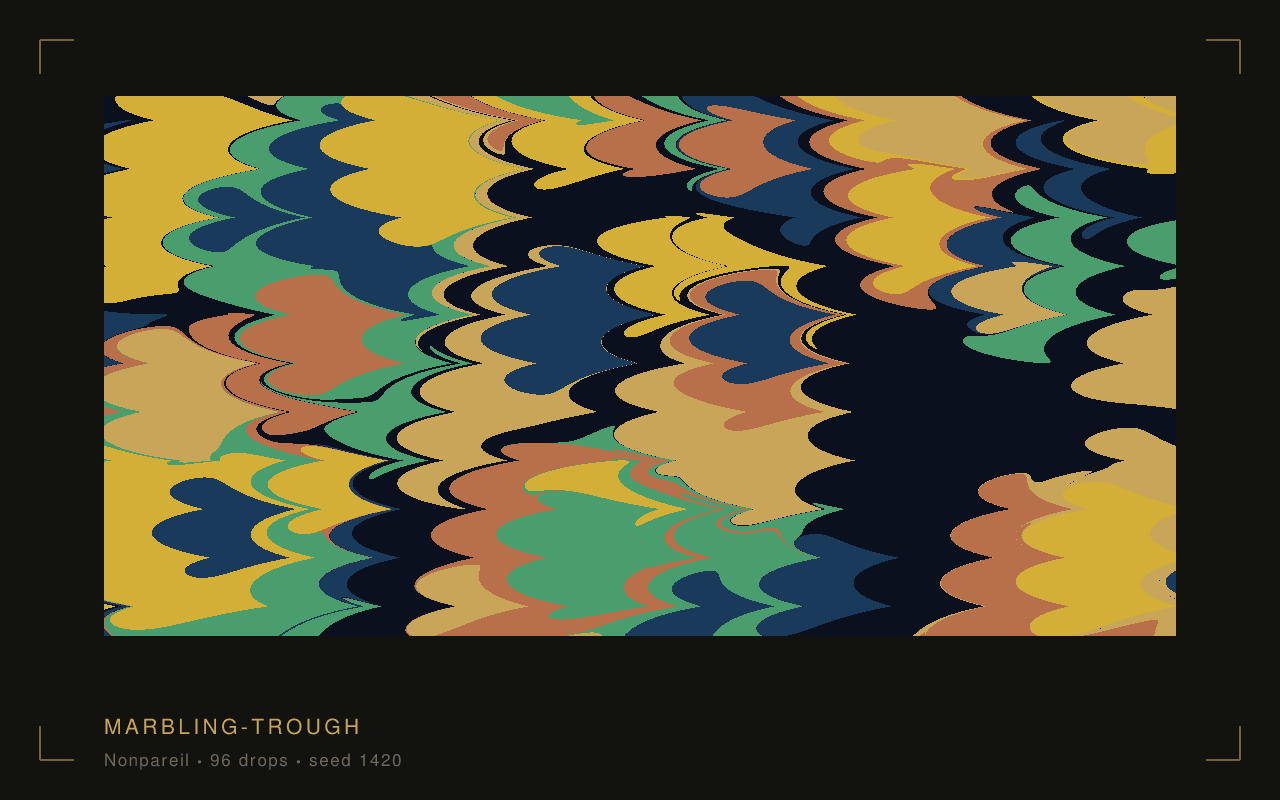
Float pigment. Draw a comb. Lift a sheet.
Deterministic marbled endpapers and covers, with archival recipes.
When does a stroke become a useful structure?
Further reading
A closer look at the ideas, materials and methods behind the work.
Find a workbench and take its method into your own project.
1 questionComponents & source is the Laboratory collection of reusable instruments, renderers and design foundations. Start with an experiment to shape a specimen, or browse the collection by format. Each available component has a preview, documented requirements and installation guidance. Existing component links and registry addresses continue to work.