The Architecture of the Sentence
Borgesian Taxonomies, Marginalia, and the Infinite Catalog as Design System
A design system is not a set of components; it is a combinatorial syntax. Tokens are grammar, components are vocabulary, and an interface is a sentence that must parse coherently under load.
Read the abstract
I keep thinking design systems have been described incorrectly. They are not collections of reusable UI components; they are combinatorial grammars. By uniting the writer's understanding of syntax with the software engineer's discipline of state, this monograph establishes the literary architecture of computing: components are vocabulary, tokens are grammar, interfaces are sentences, and products are literature produced under constraints. Borges, Calvino, Eco, and medieval rubricators enter not as decorative citations, but as Exhibit A in the defense of systematic spatial prose.
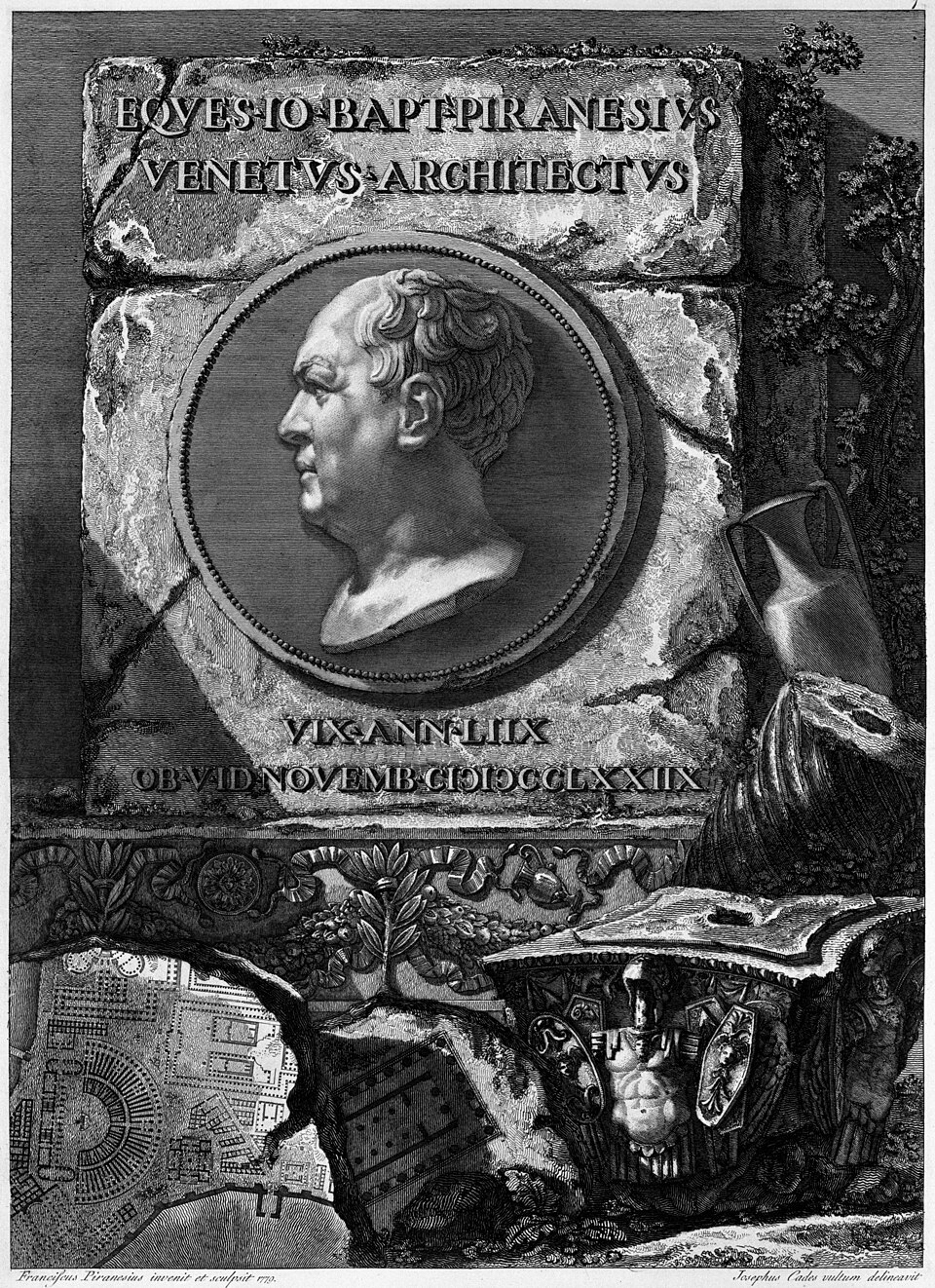
Inspect the archival plate
1. The Grammar of the Screen: Why Design Systems Are Literature
I keep thinking design systems have been described incorrectly. For fifteen years, software engineering has cataloged buttons, cards, selects, and dialogs as though a digital product were an Ikea flatpack—a box of loose components waiting for an assembly diagram. But anyone who has ever written a serious essay knows that language does not work by piling nouns on top of nouns. A box of loose words is not a book; it is a dictionary dropped down a flight of stairs.
A design system is a syntax. Components are merely vocabulary—the nouns and verbs of our interface. Design tokens are the grammar: the underlying declensions, cases, and conjugations that dictate how words negotiate meaning when placed in proximity. When you change `--ds-space-flow` or adjust `--ds-font-scale-ratio`, you are not tweaking an arbitrary CSS variable; you are rewriting the cadence and grammatical tension of every sentence the software speaks. An interface is a sentence that must parse without ambiguity under the cognitive load of a human reader.
Bring Jorge Luis Borges into the courtroom as Exhibit A. In his 1941 masterpiece 'The Library of Babel,' Borges conceived of an infinite universe composed of identical hexagonal galleries: twenty-five orthographic symbols permuted across uniform volumes of four hundred and ten pages. Borges was not merely indulging metaphysical fantasy; he was articulating the core truth of token architectures: you do not create richness by multiplying components; you achieve infinity through the rigorous, poetic discipline of a finite combinatorial grammar. When we author a design token matrix—locking modular typographic intervals to an OKLCH lightness ladder—we are constructing a miniature Library of Babel: a closed set of rules capable of generating an infinite number of coherent rooms.
☞Components are vocabulary. Tokens are grammar. Interfaces are sentences. Products are literature produced under constraints.
The linguistic hierarchy of systematic spatial software.
| Design Tokens | Grammar (rhythm, tension, declension) |
| UI Components | Vocabulary (nouns, verbs, conjunctions) |
| Page Layout | Syntax (spatial sentence structure) |
| Digital Product | Literature (meaning produced under constraints) |
2. Calvino's Invisible Cities: Architecture as Relational Value
In 'Invisible Cities' (1972), Italo Calvino presents Marco Polo describing fifty-five fictional cities to Emperor Kublai Khan. What makes Calvino's cities extraordinary is that none are defined by stone blueprints alone; rather, each city exists at the intersection of human memory, trade routes, acoustic echoes, and desire. In the city of Ersilia, residents stretch colored strings between the corners of houses to mark the relationships of blood, trade, and authority; when the strings become so dense that one can no longer walk, they dismantle the houses and leave only the web.
Modern design tokens are the strings of Ersilia. A token like `--ds-accent` or `--ds-radius-md` is not an isolated visual value; it is a relational tendon connecting intent to execution. When a theme mutates from 'Kyoto Urushi' to 'Carrara Marble,' the components do not disappear; rather, the tension of the strings changes, reconfiguring the cognitive resonance of the entire city. The architecture is not in the stones. The architecture is in the strings.
One collection. Three ways in.
Rearrange the same six records as a hierarchy, a sequence, or a network. Notice which relationships become easiest to read.
Records 01–06 / Stone · Marble · Slate · Fibre · Linen · Wool
3. Marginalia, Rubrication, and Typographic Navigation
Long before user experience designers invented sidebars, breadcrumbs, and tooltips, medieval scriptoria and early Renaissance printers perfected the spatial mechanics of high-density reading surfaces. As typographer Robert Bringhurst (2004) documents in 'The Elements of Typographic Style,' the architecture of the book developed a rich lexicon of secondary spatial layers:
The Manicule (☞): A printed pointing hand placed in the outer margin to guide the reader's eye to primary axioms—the direct historical ancestor of the modern directional cursor and action indicator.
Rubrication: The deliberate application of red cinnabar ink to section headings and initials within a black-letter matrix—the earliest formalization of chromatic semantic hierarchy.
Catchwords: A word printed at the foot of a page anticipating the first word of the following page—the earliest mechanical solution to cognitive scroll latency.
In Umberto Eco's (2009) taxonomy 'The Infinity of Lists,' he distinguishes between the practical list (which stops when the items run out) and the poetic list (which suggests the infinite and inexhaustible). Chromologium embraces the poetic catalog: an archive where every specimen points beyond itself to the wider landscape of human craftsmanship.
Classical reading markers integrated into the modern digital layout.
| Rubrication Initial | Gold vermillion display letterhead |
| Manicule Index | ☞ Marginal pointer indicating curatorial axioms |
| Catchword Footer | Dynamic preview of the succeeding chapter |
| Solander Vault | Die-cut archival storage box container pattern |
Put the argument to work.
Give an archive a dependable subject index and an optional trail of related records. Preserve a clear route back to the collection.
A useful boundary. A spatial arrangement can suggest relationships, but it cannot replace an explicit reading order or meaningful link labels.
Continue in the laboratorySources & further reading.
The books and papers behind the argument, with curatorial notes and references formatted in APA 7th edition. The citation style identifies the source; it does not claim external peer review.
Borges, J. L. (1998). The Library of Babel (A. Hurley, Trans.). In Collected fictions (pp. 112–118). Penguin Books. (Original work published 1941)
Why it belongs here The foundational literary text exploring combinatorial mathematics, spatial cataloging, and the infinite permutations of modular symbolic systems.
Calvino, I. (1974). Invisible cities (W. Weaver, Trans.). Harcourt Brace Jovanovich. (Original work published 1972)
Why it belongs here A masterpiece of architectural and structural imagination, modeling how spaces, symbols, and human desires interlock into complex semiotic networks.
Eco, U. (2009). The infinity of lists: An illustrated anthology (A. McEwen, Trans.). Rizzoli.
Why it belongs here Exhaustive historical analysis of lists, taxonomies, dictionaries, and encyclopedic collections in Western literature and art.
Bringhurst, R. (2004). The elements of typographic style (3rd ed.). Hartley & Marks Publishers.
Why it belongs here The canonical modern guide to typography, exploring letterforms as musical proportions and spatial architecture for thought.
Archival Cross-References
Related Lexicon Definitions
Borgesian Taxonomy
An archival categorization system that embraces recursive combinatorial geometry, where a finite set of modula...
Inspect Definition →Manicule (☞)
A typographic mark in the shape of a pointing hand, historically drawn in the margins of manuscripts to direct...
Inspect Definition →Rubrication
The deliberate application of high-chroma red or gold pigment to initial letterforms and chapter heads within ...
Inspect Definition →Archival Inquiries: The Architecture of the Sentence
Bespoke recursive search tree answering core questions on The Architecture of the Sentence.