A material study / 070
Cancer: The Solstice Floor
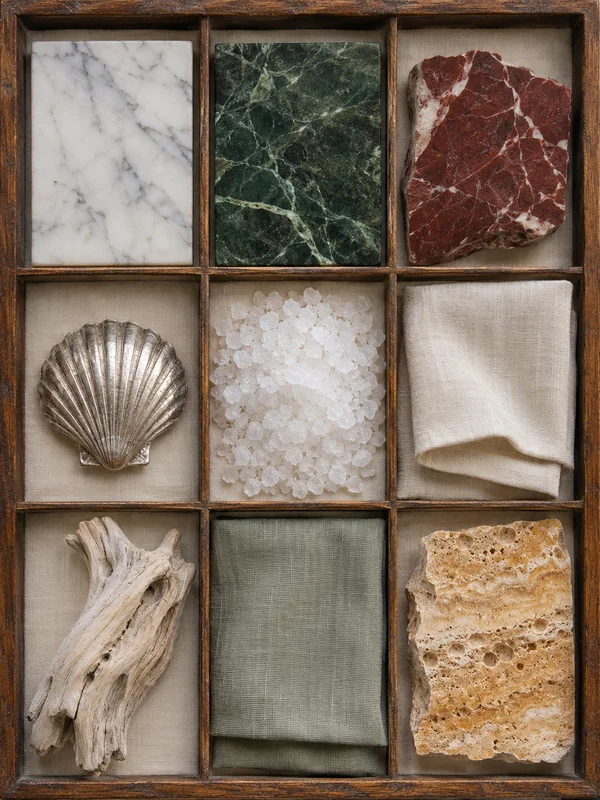
Florence · White marble, serpentine & silver.
A marble zodiac at San Miniato al Monte anchors a cool midsummer interior. White, green and red stone meet pale linen and silver, with a narrow shaft of light across the floor.

01 / The palette
Six colors, one atmosphere.
Screen colors are authored interpretations. Material photographs show surface character; they are not calibrated color samples.
02 / Play with the composition
Give the ground room, then place the accent.
Adjust the six colour areas in a screen composition. The illustrated room keeps its original materials and light.

Palette proportions / Total 100%
Starting points
An editable screen composition; the room remains a fixed imagined reference.
White Marble: 30%; Prato Green: 15%; Red Marble: 10%; Silver Shell: 10%; Pale Linen: 20%; Sage Grey: 15%
The source / Art history
A floor that follows the Sun.
Museo Galileo describes the 1207 marble zodiac at San Miniato al Monte and the solstitial illumination of its Cancer roundel, interpreted as an astronomical function of the pavement. Florence’s cathedral museum identifies white marble, green Prato serpentine and red marble in the near-identical Baptistery floor. Our silver, salt and linen extend that documented stone family into an imagined room; the beam is an editorial composition, not a simulation of the basilica.
Museo Galileo · San Miniato al Monte and the summer solstice ↗Read the holding institution’s record. No museum photograph or manuscript scan is reproduced here.
The calendar / Computed
The dates, in two frames.
Tropical
–
Exact UTC ingresses
Enters: 2026-06-21 08:16 UTC
Next sign: 2026-07-22 19:05 UTC
Sidereal · Lahiri
–
Exact UTC ingresses
Enters: 2026-07-16 17:57 UTC
Next sign: 2026-08-17 02:17 UTC
Intervals include the entry and exclude the next boundary. Sidereal offset at ingress: 24.2279° (Lahiri). Sign transitions are refined to one minute. Refinement is computational resolution, not a claim of observational accuracy. Local calendar dates may differ from UTC.
Calculation source and version
Lunologium source revision 4d4d8ecc · astronomy-engine 2.1.19. Generated reference for 2026–2028; year labels identify the year of entry, so a Capricorn interval continues into the next January.
Take away / A constellation card
Cancer, point by point.
This chart uses numerical star data supplied by HEASARC, a service of the Astrophysics Science Division at NASA/GSFC. Hoffleit & Warren, Bright Star Catalogue (1991) · Data-use terms.
North up, east left. Relative visual magnitude controls dot size. Positions use J2000.0 and a local projection with a cosine correction. The connecting lines were authored for this card; constellation boundaries and the Sun’s current position are not drawn. Print on A4 or Letter in portrait orientation.
Read the star coordinates
| Star | HR | Right ascension | Declination |
|---|---|---|---|
| 17Bet Cnc | 3249 | 124.1288 | 9.1856 |
| 65Alp Cnc | 3572 | 134.6217 | 11.8578 |
| 47Del Cnc | 3461 | 131.1712 | 18.1542 |
| 48Iot Cnc | 3475 | 131.6742 | 28.76 |
Tradition / Historical classification
A note on the tradition.
In the traditional classification recorded by Lunologium, Cancer is cardinal water, with Moon as its traditional ruler. These are cultural categories, separate from the computed solar position and the colours sampled for this study.
03 / Translate
From a room to an interface.
The interface
Objects, rooms & materials
The Solstice Floor
A marble zodiac at San Miniato al Monte anchors a cool midsummer interior. White, green and red stone meet pale linen and silver, with a narrow shaft of light across the floor.

The same palette. Different roles.
Use this palette.
A suggested interface use of the study’s paper and accent. Supporting ink is added for legibility; original palette values stay intact.
#C3C1BFSupporting ink #171615Accent #2C362CInspect application CSS
/* Sourced from Chromologium (https://chromologium.com/studies/cancer) */
/* Suggested application roles; original palette preserved separately. */
:root {
  --study-surface: #C3C1BF;
  --study-ink: #171615;
  --study-accent: #2C362C;
  --study-accent-ink: #ffffff;
  --study-original-1: #C3C1BF; /* White Marble */
  --study-original-2: #2C362C; /* Prato Green */
  --study-original-3: #5C2D25; /* Red Marble */
  --study-original-4: #938375; /* Silver Shell */
  --study-original-5: #D7CFC9; /* Pale Linen */
  --study-original-6: #7F7D71; /* Sage Grey */
}
Follow the material further.
Materials
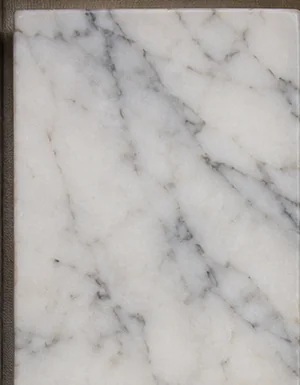
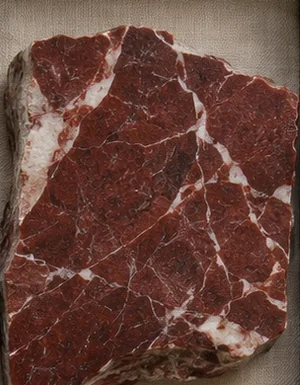
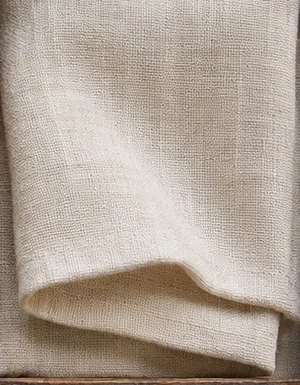
The ingredients.
An imagined setting.
A contemporary interpretation,
with references kept beside the study.
Take away
Take the study with you.
Download swatches
Sources & interpretation
A contemporary material tray and imagined cool marble-floored sitting room, informed by a linked historical source. The six screen colours were sampled from this study’s specimen drawer; they are not measured historical pigments.
- Museo Galileo · San Miniato al Monte and the summer solstice
- Opera di Santa Maria del Fiore · the two marble pavements
- Lunologium — Tropical and sidereal zodiac
The palette follows the authored material references in this collection. Room, object and material imagery were created for this study. These are imagined settings, with no affiliation to the fictional interface brands.
The controls explore screen composition, not physical pigment recipes or material measurements. Image rights · Image permissions